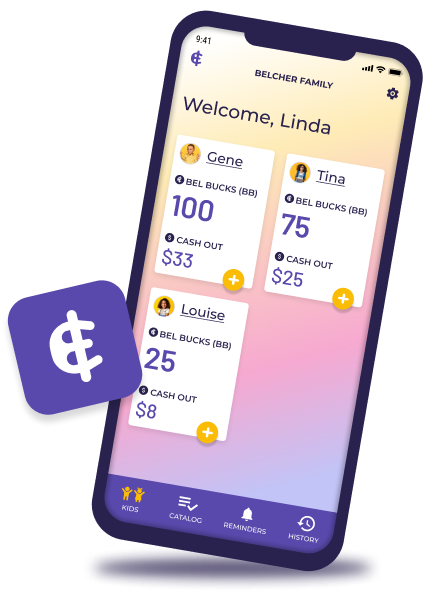
A family economy is not about paying kids for everything. It is about making effort visible.
Most kids already live in a world full of money decisions: in-game purchases, snacks at checkout, birthday cash, school book fairs, small toys, and “Can I get this?” moments. A family economy gives those moments a simple structure at home, so kids can practice earning, saving, waiting, choosing, and talking about money before the stakes are high.
Quick Answer: What Is a Family Economy for Kids?
A family economy for kids is a simple system where children can earn money or privileges through agreed-upon responsibilities, then decide how to save, spend, or work toward goals. It helps parents connect effort, choices, and money in everyday family life.
The goal is not to pay kids for being part of the family or to turn every chore into a transaction. The goal is to create a clear, age-appropriate way for kids to practice responsibility and money habits at home.
What a Family Economy Really Means
A family economy is the small “money world” your child experiences inside your household.
In a real economy, people contribute value, earn income, make choices, delay purchases, and live within limits. A family economy introduces those same ideas in a safe, parent-guided way. Your child may earn money for certain extra jobs, save toward a small toy, choose between a special snack now or a game upgrade later, and learn that money is finite.
For parents, the value is not only financial. A family economy can reduce some of the repeated money arguments because expectations are clearer. Instead of every request becoming a negotiation, you can point back to the system: “That’s something you can save for,” or “Let’s look at what you’ve earned and what your goal is.”
A healthy family economy usually includes:
- Clear responsibilities
- A way to earn
- A place to save
- Simple spending choices
- Parent-guided conversations
- Room for mistakes
It should feel practical, not intense. You do not need spreadsheets, complicated rules, or a perfect allowance philosophy to start.
What a Family Economy Is Not
Before you start, it helps to define the boundaries.
A family economy is not paying kids for everything they do. Some responsibilities are part of being in a family: brushing teeth, putting dirty clothes in the hamper, cleaning up their own mess, being kind to siblings, and helping when needed. Those basics do not always need a dollar attached.
It is also not a bribe system. Bribes usually happen in the heat of the moment: “If you stop complaining, I’ll buy you something.” A family economy works better when expectations are set ahead of time. The child knows what counts, what does not, and what choices they have.
And it is not a way to make kids “good with money” overnight. Kids learn through repetition. They may spend too quickly, change their minds, forget their goal, or feel disappointed when they cannot buy something yet. Those moments are not failures. They are the practice.
How to Start a Family Economy at Home
You can begin with a simple system and adjust as your child grows. The best family economy is one you can actually maintain.
1. Separate family responsibilities from earning opportunities
Start by naming what everyone does because they are part of the household. These are not paid tasks. For a younger child, that might include putting toys away, bringing dishes to the sink, or getting ready for school. For an older child, it might include keeping their room manageable, packing their backpack, or helping with shared cleanup.
Then choose a small number of earning opportunities. These should be specific, visible, and optional enough that your child can connect extra effort with earning.
Examples:
- Folding a basket of towels
- Pulling weeds for 15 minutes
- Helping wash the car
- Organizing a shelf
- Taking on an extra pet-care task
- Helping with a bigger weekend cleanup
Keep the list short at first. Too many options can make the system hard to manage.
2. Choose how money will be earned
Some families use a weekly allowance. Some pay per task. Some use a mix: a small base allowance for learning to manage money, plus extra earning opportunities for extra work.
There is no single correct model. The key is clarity.
If you pay per task, decide the amount ahead of time. If you use allowance, decide whether it is connected to basic expectations or simply a tool for practicing money choices. If expectations are not met, decide calmly how you will handle that before it becomes an argument.
Try to avoid changing the rules in the moment. Kids do better when the system is predictable.
3. Give money a job: save, spend, and give if that fits your family
Once your child earns money, help them decide what it is for.
A simple structure is:
- Spend: money they can use soon
- Save: money for a larger goal
- Give: money for generosity, if this matches your family values
You do not need to force complicated percentages. For younger kids, visual categories help. For older kids, you can talk through tradeoffs: “If you spend $5 today, your goal will take longer. Do you still want to?”
The important part is that your child sees money as something to manage, not just something to ask for.
4. Pick one goal your child cares about
A family economy becomes more meaningful when your child has a goal. The goal does not have to be impressive. It can be a small toy, a special snack, an in-game purchase, a book, or a game upgrade.
Help your child name:
- What they want
- How much it costs
- How much they already have
- How much more they need
- What they can do to earn toward it
This turns an abstract money lesson into a concrete plan. It also gives you a calmer answer when they ask for something: “Let’s add it to your goal list and see how you could earn for it.”
5. Hold a short weekly money check-in
A family economy works best when it becomes a rhythm. Once a week, take five minutes to review what was earned, what was spent, and what goal is next.
Keep the tone light. This is not a performance review. It is a conversation.
You might ask:
- “What did you earn this week?”
- “Are you happy with how you used your money?”
- “Do you want to keep saving for the same goal?”
- “Is there an extra job you want to do next week?”
- “Was anything confusing about the system?”
These check-ins help kids connect decisions over time. They also help parents notice when the system needs to be simplified.
A Simple Family Economy Framework
If you want an easy starting point, try the “Earn, Choose, Review” framework.
Earn
Choose 3–5 earning opportunities your child can understand. Make each one specific enough that both you and your child know when it is complete.
Example: “Fold and put away one basket of towels” is clearer than “help with laundry.”
Choose
When money is earned, your child chooses where it goes: spending now, saving for a goal, or giving if your family includes that category.
Example: “You earned $4. Do you want to put it all toward your game upgrade, keep some for a snack, or split it?”
Review
Once a week, review the choices without shame. If your child spent everything and now regrets it, resist the urge to lecture. Ask what they want to do differently next time.
Example: “You wish you still had that $3. That makes sense. What plan do you want for next week?”
This simple loop is enough for many families. You can add more detail later if needed.
A Parent Script for Starting the Conversation
If you are not sure how to introduce a family economy, try this:
“Lately, you’ve been asking for more things, and that’s normal. Instead of me saying yes or no every time, we’re going to practice how money works. Some jobs are part of being in our family, and we all do them. Some extra jobs will be ways you can earn money. Then you can decide whether to spend it, save it, or work toward something bigger. I’ll help you, but you’ll get to practice making choices.”
If your child asks, “So do I get paid for cleaning my room?” you can say:
“Keeping your room in decent shape is part of taking care of your own space. Extra jobs are different. Let’s look at the list of things you can do to earn.”
If your child wants something immediately, try:
“That’s something you can save for. Let’s check how much it costs and how much you need.”
The goal is not to shut the conversation down. It is to move from pleading to planning.
Common Mistakes to Avoid
The first mistake is making the system too complicated. If you need 20 minutes to update it, you probably will not keep doing it. Start smaller than you think you need to.
The second mistake is attaching money to every behavior. Paying for kindness, basic hygiene, or not melting down can blur the lesson. Kids still need boundaries, coaching, and family expectations that are not financial.
The third mistake is rescuing every regret. If your child spends their money on a small toy and later wishes they had saved for a game upgrade, that disappointment can be useful. You can be empathetic without undoing the choice.
The fourth mistake is expecting siblings to use the exact same system. Different ages may need different earning options, goal sizes, and levels of parent support. Fair does not always mean identical.
Start Small and Make Effort Visible
A family economy does not need to be perfect to be useful. Start with a few responsibilities, a few earning opportunities, and one goal your child actually cares about. Then use everyday money moments as practice.
The real win is not that your child buys the thing. It is that they begin to understand the path between effort, patience, choices, and outcomes.
Build your family economy with Earnee free for 30 days — no credit card required.