Fake money can teach real judgment.
Before kids manage debit cards, allowance transfers, or real purchases, they need a safe place to make money decisions without real-world consequences. Play money gives them that practice. It turns “Can I have it?” into “What will I choose?”
Quick Answer: Why Use Play Money to Teach Kids Financial Literacy?
Using play money to teach kids financial literacy works because it lets children practice earning, saving, spending, and waiting before real dollars are involved. Simulated money makes choices visible: if they spend now, they have less for later. That simple cause-and-effect experience helps kids build judgment before they get access to real money tools.
For parents, fake money also lowers the pressure. A child can make a silly choice, regret it, talk about it, and try again without overdrafts, lost cash, or emotional battles at checkout.
Fake Money Makes Abstract Lessons Concrete
Most kids do not naturally understand money as a limited resource. To them, adults tap cards, packages arrive, games unlock upgrades, and snacks appear from store shelves. The money part is often invisible.
Play money makes it visible.
When a child has ten pretend dollars and a small toy costs eight, the tradeoff becomes clear. If they buy the toy, they only have two left. If they wait, they may be able to afford something bigger later. You do not have to lecture for twenty minutes. The numbers tell the story.
This is why fake money can be so useful before a real debit card. Kids need to feel the rhythm of financial choices:
- Money comes from effort or agreed responsibilities.
- Spending reduces what is available.
- Saving requires waiting.
- Bigger goals often need several smaller choices.
- Not every want can be met at once.
Those lessons are simple, but they are not automatic. Children usually need repetition. A practice economy gives them that repetition in a low-stakes way.
The goal is not to trick kids into thinking play money is the same as real money. The goal is to give them a training ground. Just as kids practice cooking with supervision before using sharp knives alone, they can practice financial decision-making before managing real dollars digitally.
What Kids Learn When the Money Is Not Real Yet
Pretend money is powerful because the feelings can still be real.
A child may feel proud after saving enough for a goal. They may feel frustrated when they cannot afford two things at once. They may feel impatient when a reward takes longer than expected. Those emotions are part of financial literacy, too.
Here are a few real skills kids can practice with fake money.
Earning: Kids connect effort with income when they earn pretend dollars through age-appropriate tasks, routines, or family contributions. This does not mean every act of helpfulness needs a payment. It simply means some agreed work can be tied to earning so children understand that money is not unlimited.
Saving: When kids put pretend money aside for a special snack, game upgrade, or small toy, they experience progress. Watching a balance grow helps saving feel less like deprivation and more like movement toward something they chose.
Spending: Play money lets kids practice deciding whether something is “worth it.” A purchase that seemed exciting on Monday may feel less important by Friday. That reflection is valuable.
Waiting: Many financial mistakes come from urgency. Kids need practice hearing, “You can choose that, or you can wait and keep saving.” Waiting is easier to learn with pretend money than with a real checkout line behind you.
Goal-setting: A child can choose a target, see the cost, and work backward. If the goal costs 20 and they earn 5 each week, they can understand that it will take four weeks. That kind of planning is a foundation for later money confidence.
A Simple Practice Economy You Can Start This Week
You do not need a complicated system to begin. In fact, the simpler it is, the more likely your family will keep using it.
Try this four-part framework:
1. Pick the “currency”
Use play bills, tokens, points, or a simple digital tracker. The format matters less than the consistency. Kids should be able to see how much they have and understand how it changes.
2. Define how money is earned
Choose a few clear ways your child can earn. Keep it age-appropriate and specific.
For example:
- Completing a morning routine without repeated reminders
- Helping set the table
- Feeding a pet with supervision
- Finishing a weekly responsibility
- Doing an extra family job that is not part of normal expectations
Avoid making the list too long. A small, predictable system works better than a giant menu that no one remembers.
3. Create a few spending choices
Give pretend money a purpose. Maybe your child can use it for a small toy, a special snack, extra game time, choosing a family movie, or saving toward a bigger reward.
The key is that not everything should be instantly affordable. If every option costs one token, there is no real decision. Include a mix of quick wins and longer-term goals.
4. Hold a short money check-in
Once or twice a week, take five minutes to review:
- What did you earn?
- What did you spend?
- What are you saving for?
- Do you still want the same goal?
- What choice do you feel good about?
This check-in matters more than the perfect chart. It turns the system into a conversation instead of just a reward machine.
A Parent Script for Money Choices
When kids ask for something, it is easy to fall into yes, no, or “stop asking.” A practice economy gives you a calmer script.
Try saying:
“Let’s look at your money. You have 6 right now. This costs 5. You can buy it today, and you’ll have 1 left, or you can wait and keep saving for the bigger thing you wanted. Either choice is okay, but you only get to choose once.”
If your child wants both, stay steady:
“I get why you want both. I like having options too. The practice here is choosing. Which one matters more to you today?”
If they regret the choice later:
“That feeling is part of learning. Next time, we can pause before spending and ask, ‘Will I still want this tomorrow?’”
This kind of language helps kids learn without shame. The point is not to make the “perfect” choice every time. The point is to notice the tradeoff, make a decision, and learn from it.
When to Move From Fake Money to Real Money
There is no universal age when kids are ready for real money tools. Readiness depends on the child and the family. A good sign is when your child can explain basic tradeoffs in their own words.
For example, they may say:
- “If I spend this now, I won’t have enough for my goal.”
- “I need two more weeks to save.”
- “I changed my mind. I don’t want that as much anymore.”
- “Can I earn more by doing an extra job?”
Those comments show that the practice is working. Your child is not just collecting points. They are thinking.
You can then start adding small amounts of real money in controlled ways. Maybe they manage a small cash allowance. Maybe they help compare prices at the store. Maybe they decide how to use a limited budget for a treat. The transition does not need to be dramatic.
Fake money is not a replacement for real financial experience. It is preparation. It gives kids a safe place to build the muscles they will need when the dollars are real and the choices get bigger.
For many families, this also makes money conversations less tense. Instead of introducing financial lessons during a meltdown in the toy aisle, you have already practiced the decision at home. Your child may still be disappointed. That is normal. But the idea of limited money will not be brand new.
A simple practice economy can help your child learn that money is a tool, not magic. They can earn it, save it, spend it, wait for something better, and recover from choices that did not feel great. Those are real-life skills, even when the dollars are pretend.
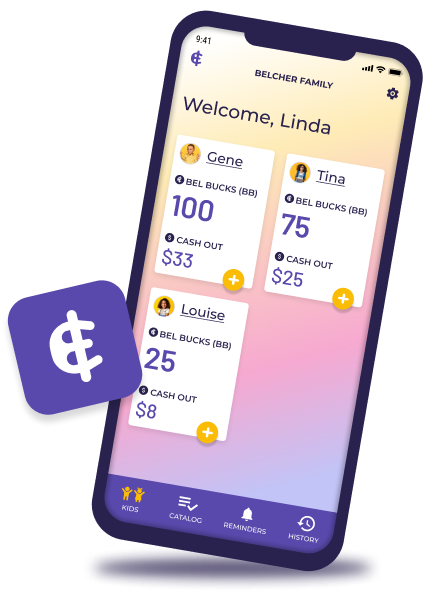
Set up a practice economy in Earnee free for 30 days — no credit card required.