Question for parents: what is your allowance actually teaching?
Not what you hope it is teaching. Not what you explained the first time you handed over a few dollars. What is the system teaching through repetition, week after week?
Because kids learn money mostly by practicing patterns. If allowance shows up automatically, gets spent immediately, and resets every Friday, the lesson may be “money appears, money disappears.” If allowance is tied to every chore, the lesson may become “I only help when I get paid.” If parents say yes to every extra request after the money is gone, the lesson may be “running out does not really matter.”
Quick Answer
An allowance system for kids that teaches saving should give children regular practice earning or managing money, making tradeoffs, waiting for things they want, and setting simple goals. The best system is not the fanciest one. It is the one your family can use consistently, with clear rules and calm follow-through.
This allowance audit will help you spot what your current setup is teaching and make one practical improvement this week.
What Your Allowance System Is Already Teaching
Every family has a money system, even if it is informal.
Maybe your child gets a set amount each week. Maybe they earn money through chores. Maybe you do not use allowance at all, but you buy things when they ask. Each version teaches something.
A child who gets money with no conversation may learn that money is private and mysterious. A child who has to negotiate every purchase may learn that persistence matters more than planning. A child who saves for a game upgrade and finally buys it may learn that waiting can feel good when the goal is theirs.
The point is not to create a perfect household economy. You are raising a kid, not running a payroll department. The point is to notice the hidden lesson underneath the routine.
Ask yourself:
- Does my child know when money is coming?
- Do they know what they are responsible for buying?
- Do they have a reason to save?
- Do they experience running out in a safe, small way?
- Do we talk about choices without turning every purchase into a lecture?
If the answer to most of those is “not really,” that does not mean you have failed. It means your allowance system is ready for a tune-up.
The Three Lessons a Good Allowance System Should Practice
An allowance system for kids that teaches saving usually practices three simple lessons: money has limits, choices have tradeoffs, and waiting can be worth it.
First, money has limits. Kids need chances to handle an amount that is small enough to be safe but real enough to matter. If they spend all their money on a special snack, they may not have enough for the small toy they wanted later. That is not a crisis. That is the lesson.
Second, choices have tradeoffs. Saving is hard to understand in the abstract. It becomes real when a child chooses between something now and something later. Parents can help by naming the tradeoff without taking over: “You can buy the in-game purchase today, or you can keep saving for the bigger game upgrade.”
Third, waiting can be worth it. Kids are not born loving delayed gratification. Honestly, adults are not always great at it either. Saving gives children a way to practice waiting with a visible reward at the end. The goal should be concrete, age-appropriate, and chosen with enough child input that they care about it.
You do not need to make allowance complicated to teach these lessons. You just need a repeatable rhythm.
A Simple Allowance Audit for Parents
Use this quick audit to see what your current system is teaching. You can do it in ten minutes.
1. What triggers the money?
Is allowance automatic, earned, tied to chores, tied to behavior, or handled case by case? There is no single right answer, but the trigger should be clear. If your child cannot explain how money happens in your house, the system may feel random.
2. What is the child expected to pay for?
Decide which purchases are parent expenses and which are child choices. For example, you might cover school needs and family meals, while your child uses their money for small toys, extras, or game upgrades. Clear boundaries reduce arguments.
3. Is saving built in or optional?
If saving is only mentioned after the money is already in their hand, spending usually wins. Consider helping your child choose one savings goal before allowance day. Even a small goal gives saving a purpose.
4. What happens when the money is gone?
This is where many allowance systems quietly break. If a child spends everything and parents immediately buy the next want anyway, the system teaches that limits are flexible. A calm “not today” is part of the education.
5. Are you having money conversations or money interrogations?
A good conversation sounds curious: “What are you thinking of doing with your money?” An interrogation sounds like a test: “Are you really going to waste it on that?” Kids are more likely to reflect when they do not feel judged.
After the audit, choose one thing to adjust. Not five. One. Consistency beats a complete overhaul you abandon by next weekend.
A Parent Script for Teaching Saving Without a Lecture
Parents often know what they want to teach, but the moment happens in the checkout line, in the car, or while a child is begging for something online. A simple script helps.
Try this:
“Your money has three jobs: spend some, save some, and think before it’s gone. You can choose how to use it, and I’ll help you think it through. If you spend it today, that means waiting longer for your goal. If you save it, you may have to skip this thing right now. Which choice do you want to make?”
Then pause.
That pause matters. It gives your child ownership. If they make a choice you would not make, and it is safe, let the choice stand. A small regretted purchase can teach more than a long parent speech.
If they spend all their money and come back later asking for more, you can say:
“I get why you want that. Your money is used up for now. Let’s add it to your list for next time.”
This is not punishment. It is practice. The goal is to help kids connect choices with outcomes while the stakes are still small.
Make Saving Visible and Repeatable
Saving is easier for kids when they can see progress. A vague “save your money” is not very motivating. A visible goal is better: “You need $12 for the toy, and you have $5 now.”
You can use a jar, a note on the fridge, a simple chart, or a digital tool. The format matters less than the rhythm. Help your child name the goal, track progress, and decide how much of each allowance or earning opportunity goes toward it.
A weekly routine might look like this:
- Money comes in.
- Your child checks their goal.
- They choose what to save.
- They choose what is available to spend.
- You talk briefly about any tradeoff coming up.
Keep the conversation short. Kids do not need a family finance seminar every week. They need repeated, low-pressure practice.
This is also where parents can avoid two common traps. The first is rescuing too quickly. The second is controlling too tightly. If you rescue every time, the lesson disappears. If you control every choice, your child does not get to practice. Aim for a middle path: clear limits, real choices, and calm support.
Allowance does not have to teach every money lesson at once. It can simply become the place where your child practices earning, saving, waiting, goal-setting, and talking about money in a normal way.
If your current system is messy, start there. Name what is happening. Pick one clear rule. Add one savings goal. Hold the boundary the next time the money runs out.
That is an allowance system that teaches more than spending.
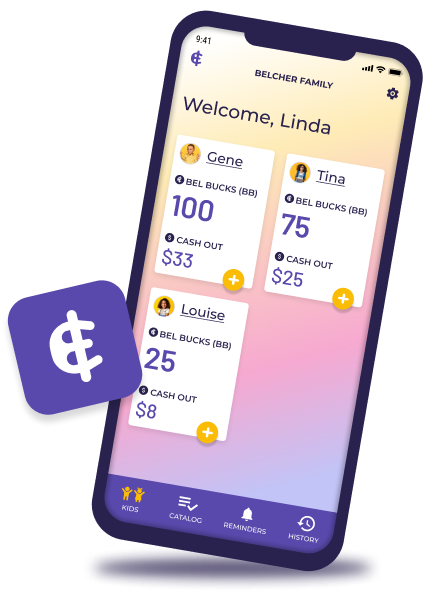
Audit your allowance system in Earnee free for 30 days — no credit card required.